
ChatGPT
Close’s official ChatGPT plugin connects ChatGPT to your Close data. Ask ChatGPT about your Leads, activities, and pipeline, or have it create Notes and Tasks, draft emails, manage Voice Agents, and pull Notetaker meeting transcripts.
The plugin uses the Close MCP Server, the same server behind the Claude connector.
The older Close CRM GPT, found under Explore GPTs, has been replaced by the plugin. If you used Close GPT, connect the plugin instead.
Connect Close to ChatGPT
- Open the Close plugin in ChatGPT, or search for Close in the ChatGPT plugin directory. It’s listed as Close CRM for ChatGPT.
- Click Connect. ChatGPT opens Close’s sign-in page.
- Sign in to Close, then choose the organization and permissions to grant.
- Return to ChatGPT and start a chat.
Permissions: The permissions you grant decide what ChatGPT can do in Close.
- Read: View data only.
- Write safe: View data and create records, such as Notes, Tasks, and email drafts.
- Write destructive: View, create, update, and delete records. Editing an existing field, such as a Lead’s URL or description, requires this permission.
To change permissions later, disconnect and reconnect the plugin.
ChatGPT Business and Enterprise workspaces: A workspace admin may need to allow the Close plugin, or limit which of its tools members can use, before you can connect it.
What you can do
Summarize Leads and activity
ChatGPT can summarize a Lead’s recent emails, notes, calls, custom activities, meetings, and tasks, and assess sentiment. Refer to a Lead by name or Lead ID.
- “Based on the meetings, notes, and call notes for Lead XYZ, list the most common sales objections.”
- “Is Lead XYZ at risk of churning based on recent activity?”
- “Prepare 5 talking points for the account review call with Lead XYZ.”
- “Is Lead XYZ qualified?”
Draft emails and agendas
ChatGPT can write an email draft on a Lead from its activity history. The draft is saved to the Lead in Close for you to review and send.
- “Draft a follow-up email to Lead XYZ proposing next steps.”
- “Create an agenda for our next sync with Lead XYZ based on recent activity.”
Work with meeting transcripts
ChatGPT can retrieve Notetaker transcripts, labeled by speaker.
- “Pull the transcript from my last meeting with Lead XYZ and list the action items.”
- “What pricing concerns came up in this week’s meetings with Lead XYZ?”
Create Notes and Tasks
- “Add a note to Lead XYZ summarizing today’s call.”
- “Create a task for me to follow up with Lead XYZ next Tuesday.”
Report and segment Leads
- “Show me Leads with active Opportunities.”
- “Show me Leads that haven’t been contacted by email, call, or SMS in 3 months.”
- “Show me Leads in Potential status with no Lead owner.”
For the full list of tools, see Close MCP Tools.
See additional examples and get inspiration on the Close Blog.
Advanced Data Analysis
As a bonus, you can perform Advanced Data Analysis. Select “Advanced Data Analysis” from the dropdown and upload a file using the plus icon in the chat on the left. We recommend exporting data from Close to a CSV for this.
Please note that Advanced Data Analysis is separate from plugins. While this workflow might not be the most convenient, it’s currently the only way to utilize Advanced Data Analysis.
TThings to know
- ChatGPT’s answers aren’t deterministic and can be wrong. Check results before you act on them, especially before updating or deleting records.
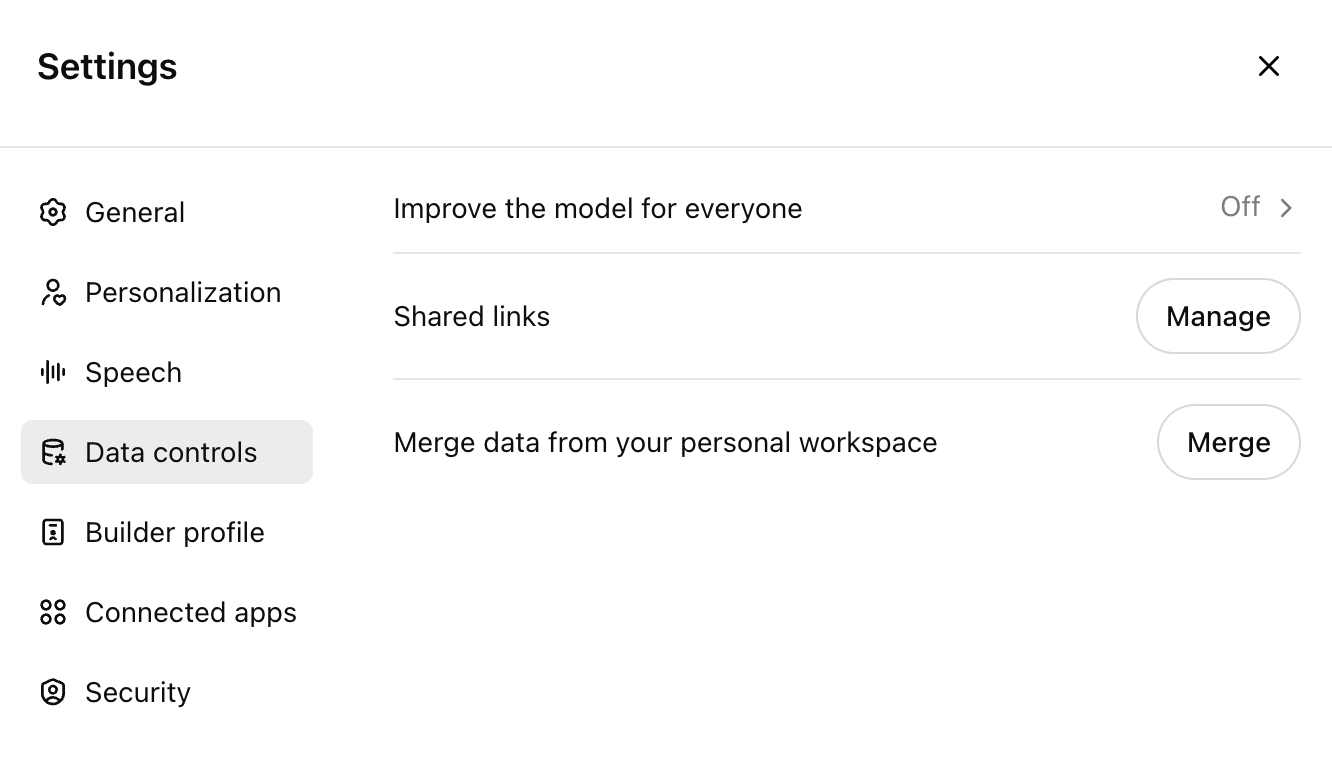
- OpenAI may use your chats to train its models, depending on your ChatGPT plan and settings. You can turn this off under Settings > Data controls in ChatGPT. For other privacy requests, contact OpenAI.
Revoke access
To disconnect ChatGPT from Close, go to Settings > Accounts & Apps > Authorized Apps in Close and revoke the ChatGPT entry.